World’s richest investors eyeing property in Nairobi, report reveals
While Kenyans are struggling to access mortgage loans due to the capping of interest rates, property in Nairobi is attracting the attention of the world’s richest people. report by Knight and Frank, dubbed Inside View, Kenya 2018, reveals that Nairobi is on the radar of many High Net Worth Investors (HNWIs) with 4% of the global HNWIs looking to own property in Kenya’s Capital. UK’s upper class leads the pack of foreigners seeking to acquire property in the country with 63% of its HNWIs population expressing interest. The UK tycoons’ interest is closely followed by 16% of South African HNWIs and 11% of Spanish, Mauritian and US HNWIs who have all been lured by Kenya’s projected Gross Domestic Product (GDP) growth of 5.8% this year. About 5% of the super-rich in Uganda, Tanzania, Nigeria, Ghana, Switzerland, France, Canada and Lebanon are also likely to invest in homes in Kenya. Kenya’s projected 5.8% projected GDP growth is significantly above Sub-Sahara Africa’s projected growth rate of 3.5%. Other factors making Kenya an ideal proposition for investors include the country’s rapid urbanisation rate which stands at 4.3% per annum versus a global rate of 2.0% as well as an expanding middle class. Kenya…


It pays to save early and aggressively

We all constantly hear about the need to save: Save for a rainy day, save for your children’s education, save for your retirement and so forth. However, in today’s world of consumerism and instant gratification, it is easy to get tied up in the here and now and to believe that the future will work itself out. As soon as that time machine is up and running, Future You will be coming to give Present You a piece of their mind! For those of us that do save regularly, it can be challenging to know how much to save, or where to invest our savings. Too often our primary focus is on the fees we pay for investment services, when we should really be focusing on the value we get for the fees we pay. For example, if investment manager A consistently delivers one per cent more in returns each year than manager B (net of fees and expenses), then what does it matter how much more expensive manager A is? You are getting more in returns and they are worth every penny. The power of one per cent stems from the ‘magic’ of compound interest. Compound interest, in simple…

How to maintain a swimming pool in your backyard

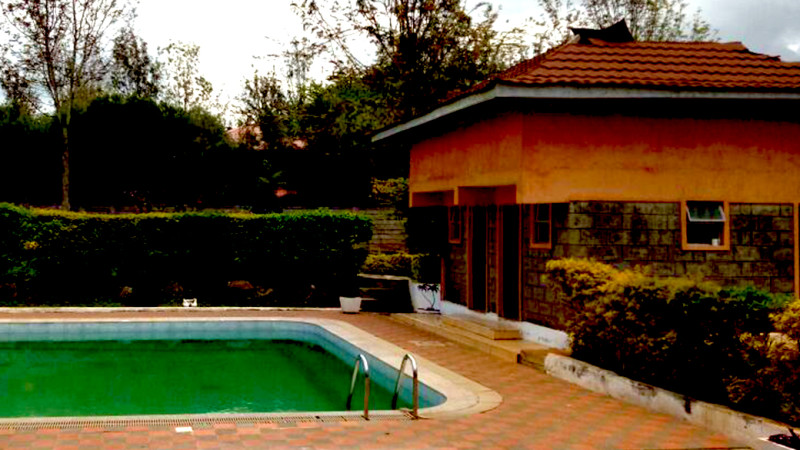
In modern culture, recreation is more of a necessity rather than a luxury, and herein, the swimming pool slides in comfortably. Swimming is one of the exercises that helps build muscles, build your cardio-respiratory fitness and burn calories, all without putting much pressure on your joints. Additionally, the presence of a water feature in a compound gives the environment a calming and soothing touch, and one of the most common domestic water features that serves this purpose is the swimming pool. Swimming pools come in various sizes and shapes, the shapes vary from rectangular, oval, geometric, square, the list goes on and on. One can easily custom make their pool as per their preference and style appeal. Some of the upcoming trends in swimming pool design include having built-in ledges and bars that give the pool a different aesthetic touch. The ledges and bars can be converted into actual bars, to hold drinks as you enjoy your swim. In Kenya, two types of pools are commonly available, namely the duck level/overflow pool and freeboard pool. A duck level pool as the name implies has water filled right to near the brim, such that any disturbance or turbulence cause the water to overflow….

Are interest rates to blame for real estate market woes?

There is a lot of discussion regarding the implementation of interest rate cap law and how it has affected the economy and the real estate market over the last two years. However, it’s important to understand if (IRC) interest rate cap is the reason behind the industry’s stagnation and bad performance, or if it is simply used as an excuse. The reality is that Kenya’s real estate market has been struggling to avoid a total market collapse for the last almost three years. Even some of the most positive market reports clearly state that the market is under pressure. Hass Property Price Index for the second quarter of 2018 shows that while there was a marginal 3.6 percent increase in apartment rental prices in Nairobi and satellite towns, land prices stagnated. KBA latest house price index also shows that despite the high expectations for a market recovery after elections, the market does not seem to respond or to be able to reverse the negative trend of the last two years. Before analyzing the actual correlation of interest rate caps and the Kenyan property market, it is important to understand what exactly is the interest rate cap law, its history and…

Current Real Estate Trends in Kenya & How They Affect Investors

For the past two decades, the Kenyan real estate market has grown exponentially as evidenced by its contribution to the country’s GDP which grew from 10.5% in 2000 to 12.6% in 2012 and 13.8% in 2016. The growth is driven by; Infrastructural developments such as improved roads, utility connections, upgrade of key airports; Stable GDP growth which has averaged at 5.4% over the last 5 years against a Sub- Saharan average of 4.1%; Demographic trends such as rapid urbanization at 4.4% p.a against the world’s 2.5% and population growth averaging at 2.6% p.a; and High total returns averaging at 25.0% against 12.4% in the traditional asset classes. These factors have therefore led to the development of unique trends across the various real estate themes, as investors sought to gain high returns and buyers sought aspirational lifestyles and quality products. COMMERCIAL Office The Kenyan office sector has grown rapidly over the past decade, in tandem with the improving economy, as firms expanded in their operations while multinational firms continually set up their base in the country which is considered the key gateway to the East African market and a leading economic hub in the Sub-Saharan Africa. As the sector grows, it’s witnessing new…

Cytonn report reveals towns with best returns on real estate

Real estate sector in Nakuru Town has recorded the lowest rental yields among selected cities and towns in Kenya, with an average rental yield of 6.1%. This is in comparison to Nyeri, Mombasa, Nairobi, Kisumu which recorded 8.6%, 8.4%, 8.1% and 7.8% respectively., Cytonn Investments says in its Real Estate Investment Opportunity Report that the real estate sector in Nakuru town recorded total returns of 14.9%. According to the report, mixed use developments, had the highest returns, recording average rental yields of 8.9%, retail, commercial office and residential themes recorded average rental yields of 5.8%, 5.4% and 4.2%. ”The performance is mainly bolstered by Positive Economic Growth attracting government institutions, private investors, and entrepreneurs to the county,” Cytonn’s Senior Manager, Regional Markets, Mr. Johnson Denge said, He noted that devolution has opened up Nakuru town with positive demographics such as population which has been growing at an average of 3.1 percent per annum, compared to a Kenyan average of 2.6 percent p.a. Research Assistant, Cytonn Investments Mr. John Keya said that in recent years, the expansion of the Nakuru-Nairobi Highway, and upgrading of roads linking several suburbs in the Town has also opened up the town. Continue Reading Source | Business…

State seeks to help Kenyans buy its half million low cost houses

If you earn less than Sh100, 000 and can spare a third of your income, owning a home will be within your reach under a Government plan to spur a housing boom. The State has created a company to offer cheap loans to banks to target civil servants, self-employed persons, or salaried employees with mortgage of up to 30 years to reduce the pressure on repayment. The Kenya Mortgage Refinancing Company (KMRC) will receive a Sh16.1 billion ($160 million) from the World Bank to start operations this month and will be owned by the Government and the private sector. “KMRC will contribute to the broad objective of the Government of Kenya to deliver 500,000 affordable homes by 2022 targeting households with incomes of up to Sh100,000 per month,” the National Treasury said in a document pitched to bank bosses and sacco CEOs. Treasury Cabinet Secretary Henry Rotich yesterday told financial institution bosses in Nairobi that the Government aimed to own about 20 per cent of the firm and would pump in Sh1.5 billion fully paid share capital. The rest of the Sh5 billion authorised share capital will come from development partners, banks, and saccos interested in owning part of the…